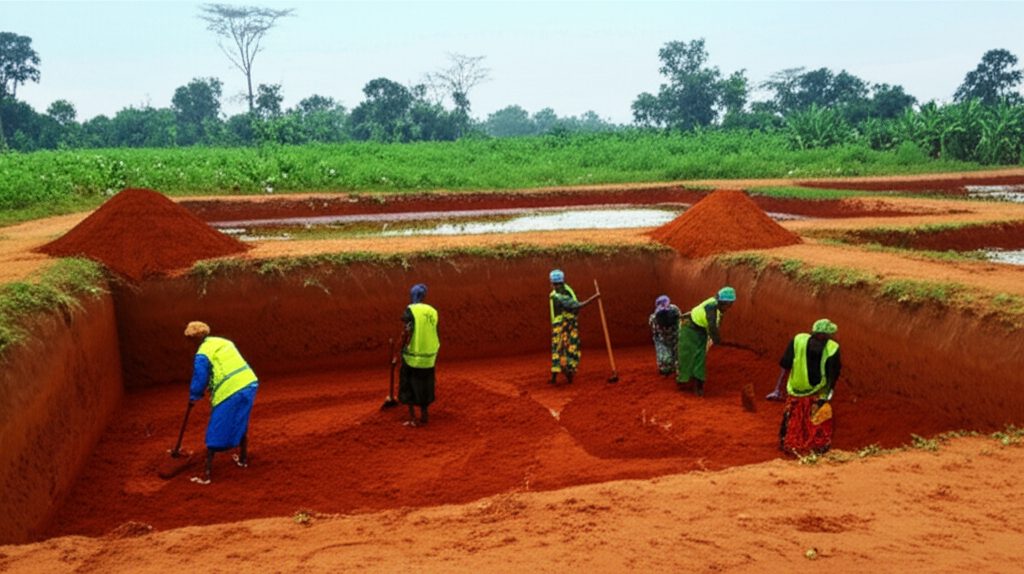
Workers digging fish ponds by hand — the scale of manual labour that builds self-sufficiency
Our Approach

Four pillars.
One sequence.
No shortcuts.

Every project follows the same proven order: secure water, establish food production, create livelihoods, then build education. Each pillar depends on the one before it.
Water
Food
Livelihoods
Education
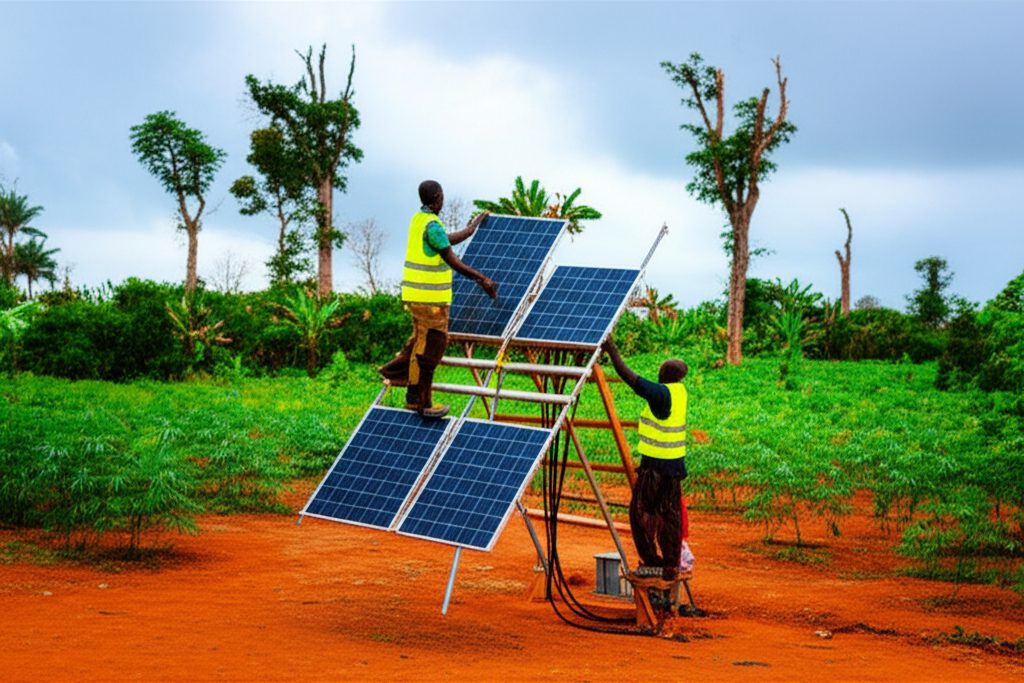
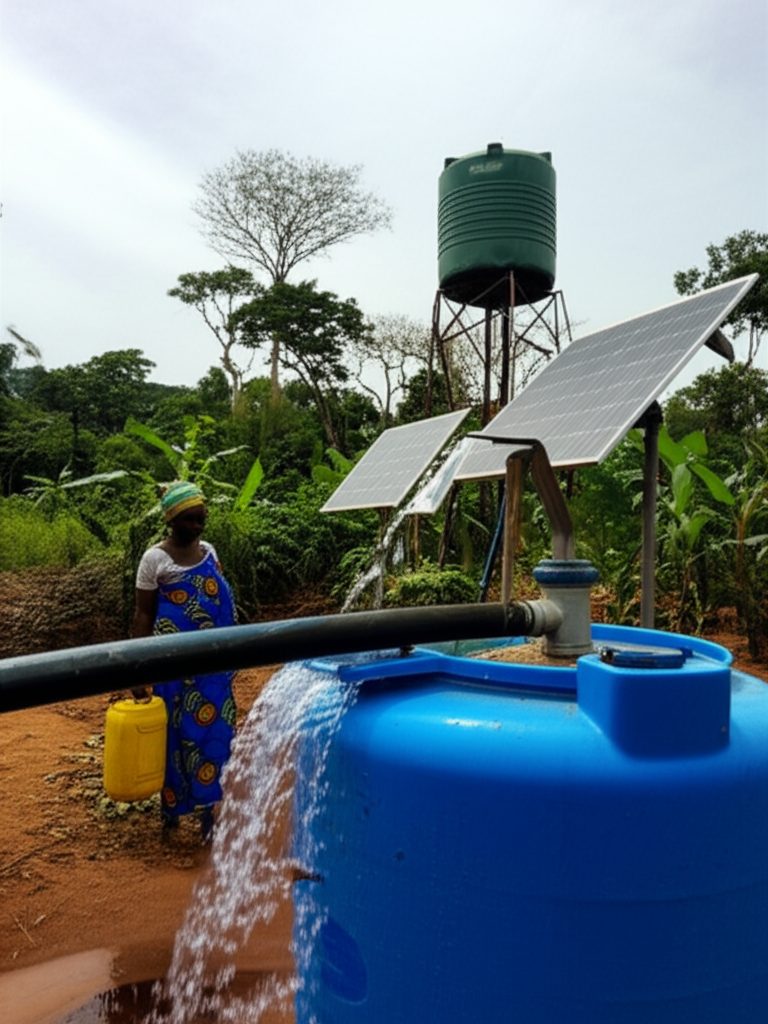
Solar-powered borehole pumping 10,000 litres of clean water daily
Solar-powered borehole and elevated storage tank, Lolo Camp
Pillar 1

Water

Without clean water, nothing else is possible. Dirty water causes disease, absorbs time (women walk kilometres to collect it), and can't support agriculture at scale.

What we build: Solar-powered boreholes (70m+ depth), elevated storage tanks (5,000L+), gravity-fed distribution. The well runs on sun — no fuel costs, no moving parts to fail.

At Lolo: 10,000 litres/day from a single borehole.

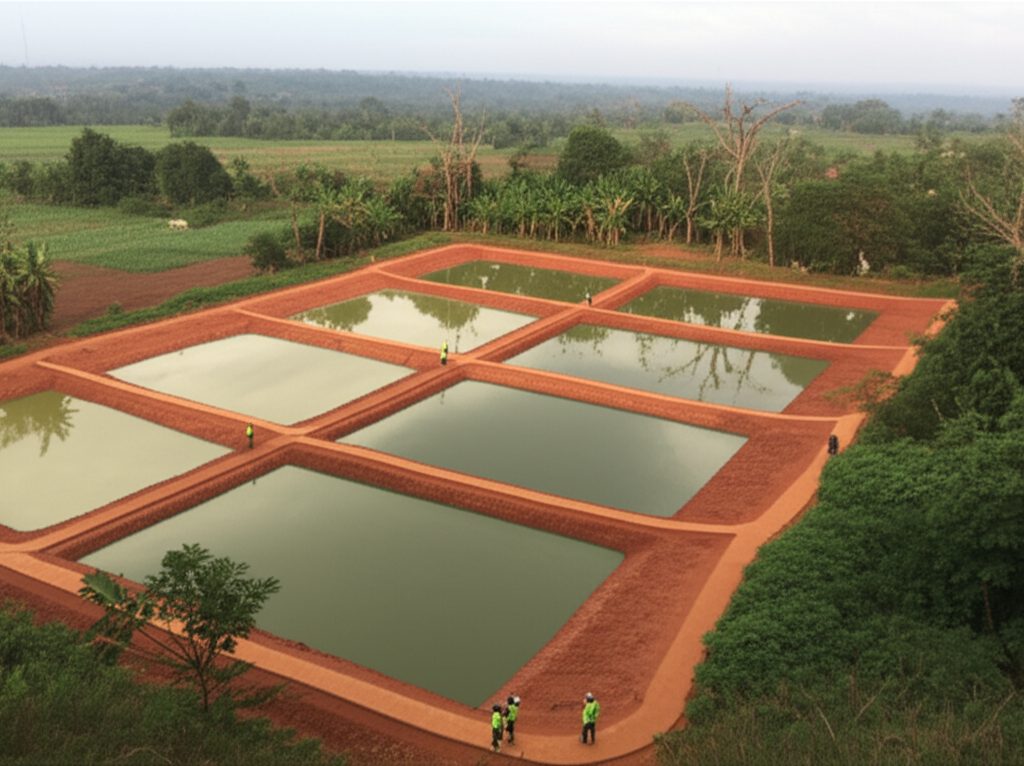
Aerial view of 10 fish ponds carved into the red laterite earth
Aerial view: 10 earthen ponds carved into red laterite, Lolo Farm
Pillar 2

Food

With water secured, we establish food production systems. At Lolo, this means aquaculture — 10 earthen ponds stocked with catfish, with capacity for 35,000 fish across 3 harvest cycles per year.

Why fish? Catfish grow fast (harvest-ready in 6 months), protein-dense, culturally preferred, and the ponds double as water storage. The community feeds itself and generates surplus for sale.

Projected: £92,000 annual revenue from fish sales.

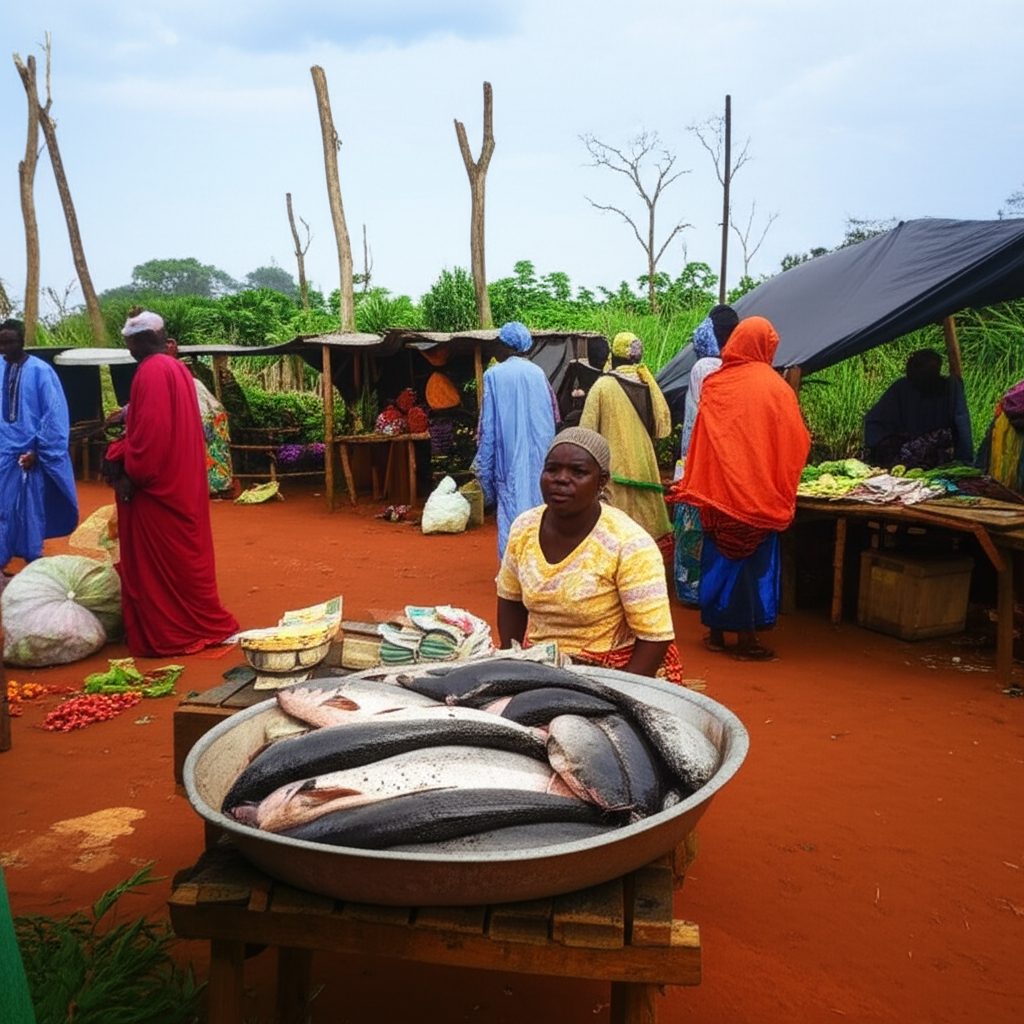
Fresh catfish for sale at the local market — surplus creates livelihoods
Fresh catfish at Lolo market — surplus creates livelihoods
Pillar 3

Livelihoods

Surplus food creates economic opportunity. Fish is sold at local markets. Revenue funds operations, creates employment, and builds an economy that doesn't depend on outside funding.

Economic model: The community owns and operates the farm. Revenue covers operational costs first, then reinvestment, then community projects. External funding becomes unnecessary within 12-18 months of first harvest.

ROI: 167% over 3 years from a £43K investment.

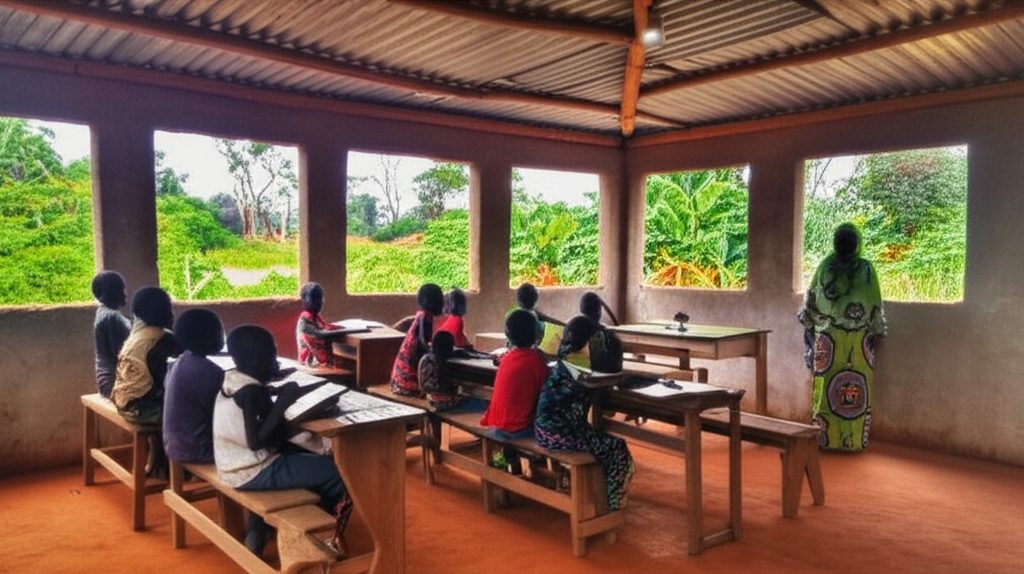
Children study at wooden desks in an open-air classroom with corrugated roof
Children study at an open-air classroom, Lolo Camp
Pillar 4

Education

Education is the final pillar because it must be sustained. A school funded by a one-off campaign closes when the campaign ends. A school funded by a fish farm runs forever.

At Lolo today: Children study Quran on wooden boards, sitting on the earth beneath a tin roof. They have teachers but no furniture, no materials, no light after sunset. The aquaculture revenue will fund a permanent school with solar lighting, desks, and trained teachers.

Target: Permanent school operational within Year 2.

The sequence is not arbitrary.

Skip water?

Fish ponds need 50,000+ litres. Without a reliable water source, the entire food system fails. Every aquaculture project in arid regions that skipped water infrastructure has collapsed.

Skip food?

A community that can't feed itself can't attend school, can't work consistently, can't plan beyond the next meal. Food security is the prerequisite for all economic activity.

Skip livelihoods?

A school without an economic base closes when the funding cycle ends. Sustainable education requires a self-funding mechanism — and that means a functioning local economy.

We publish everything.

Budgets. Receipts. Setbacks. Failures. If something goes wrong — and it will — we tell you. We believe that honest reporting builds more trust than polished marketing.

Example: The Solar Battery Incident

In February 2025, we arrived at Lolo for an M&E visit to find our solar batteries destroyed. Someone had rewired them incorrectly — a month of stored power, gone. We replaced them, revised the security protocol, and moved on.

We could have hidden this. Instead, we photographed the damage, documented the cost, and published it in our M&E report. Because if you're going to trust us with your money, you need to know we'll tell you the truth — even when the truth is uncomfortable.

Solar panel installation powering the borehole pump — clean energy for clean water

Ready to see the model in action?

Explore our flagship project in Lolo, Cameroon — or reach out to discuss how we can apply this model to your community.

View Projects Get In Touch